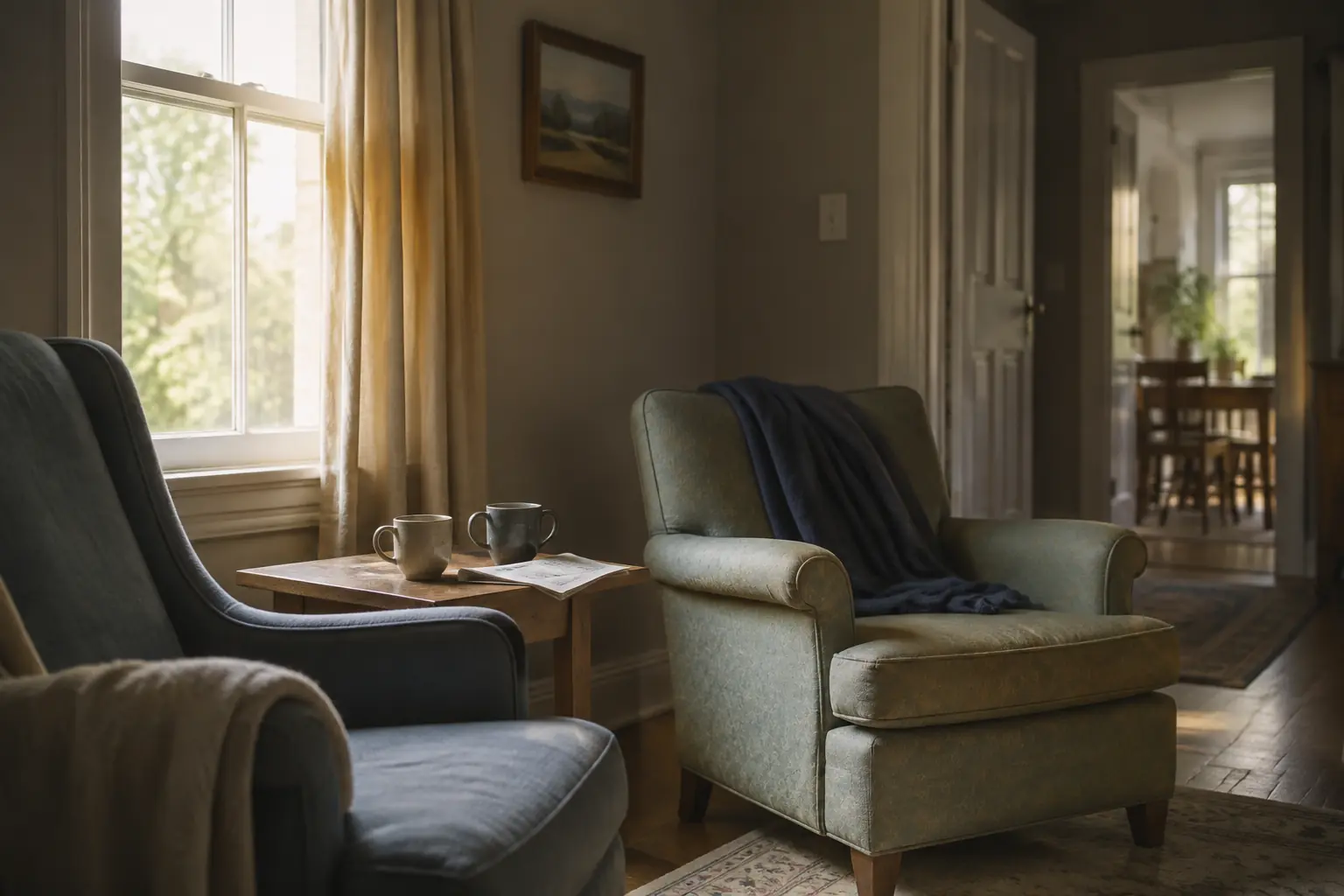
You may have already had the conversation six times in your head. In one version you are perfectly calm. In another, you finally say everything. Then your spouse walks through the door, glances at your face, and you can feel the evening tipping before either of you has begun. Hard conversations do not need a perfect script. They need a smaller doorway—one subject, enough time, and an opening that tells your spouse why you are coming toward them.
01
Prepare the doorway, not the prosecution
Before you begin, finish three sentences: “The subject is… What I hope for is… The first thing I am asking is…” If you need five paragraphs to explain the subject, it is still too large.
Timing is not everything, but it matters. Avoid starting as someone is leaving, falling asleep, or managing a public scene. Ask for twenty or thirty minutes and be willing to choose a better time together.
A hard truth is easier to hear when it arrives with a door handle.
02
Tell them why you are coming closer
“We need to talk” makes most bodies prepare for impact. Try, “I care about how we handle this, and I want us to understand what happened.” Then name the moment you both could have seen and what it was like for you.
Leave motive out of the opening. “When the plan changed and I did not hear from you, I felt alone with the evening” is easier to enter than “You do not respect me.”
03
Keep one hurt from becoming every hurt
When your spouse disagrees, the temptation is to bring more evidence. Soon you are discussing lateness, their mother, the vacation, and 2019. More examples rarely create more understanding.
If another subject matters, write it down for later. For now ask, “What did you hear me saying?” Then listen to the answer. Correction works better than repetition at a higher volume.
04
Do not demand a lifetime answer tonight
Some conversations end with understanding, not agreement. Some reveal that more information or support is needed. Close by naming what is settled, what is not, and what each person will do next.
If you pause, choose a return time. “Tomorrow after dinner” keeps the conversation held. “Later” often leaves one spouse chasing and the other hiding.
Give the truth a chance to land
The opening changes what becomes possible next.
Open the door with
- A clear subject
- A defined amount of time
- Plain observations before interpretations
- A next step small enough to keep
Block the door with
- Starting at the worst possible moment
- Bringing the entire marriage into one talk
- Mind-reading motives
- Using “later” without a return time
If the talk still feels impossible
You do not need perfect calm to begin well.
What if there is never a good time?
Ask for a specific window and offer two options. If your spouse repeatedly refuses any time at all, the problem is no longer your opening sentence; it is their unwillingness to engage.
Should I write a letter instead?
Writing can help you become clear or communicate when speaking becomes chaotic. Do not use a long letter to deliver a case your spouse cannot respond to. Keep it focused and name how you hope to continue the conversation.
What if I cry or get angry?
Emotion does not ruin a conversation. Slow down, name what is happening, and pause if you can no longer stay respectful or understand each other. The goal is not emotional flatness.
What if the issue is urgent?
Health, safety, money, legal exposure, or ongoing deception may require prompt action and qualified support. A gentle opening should never delay necessary protection.